Connected Safety

3M Peltor Connected Safety Turns Hearing Protection Into Program Signals

Connected hearing protection is most useful when it helps supervisors see practical program signals: headset assignment, training status, battery and hygiene checks, noise-zone use cases, and worker feedback. The goal is not to turn PPE into a complex IT project. The goal is to close the loop between the product a worker wears and the evidence an EHS team needs.
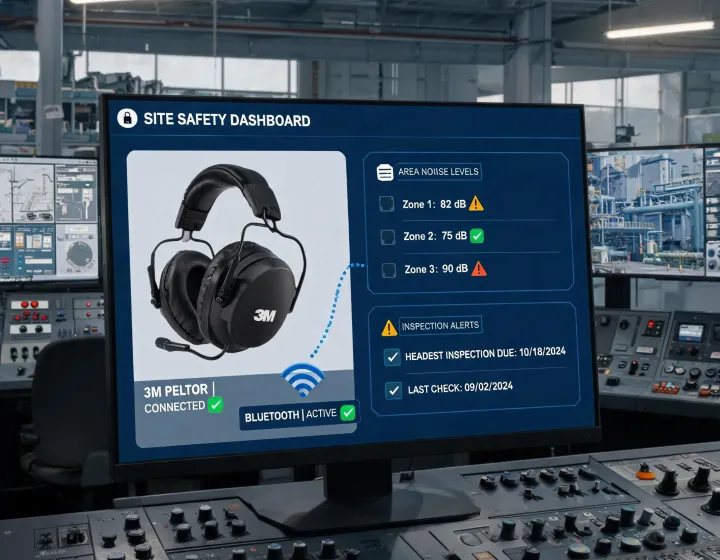
Connected Peltor hearing protection dashboard
12 zonesNoise areas mapped
96%Training records complete
18 dueHygiene kits this month
3 integrationsEHS, BI, procurement queue
EN 352 filesBluetooth governanceSupervisor dashboardProcurement exportEHS review
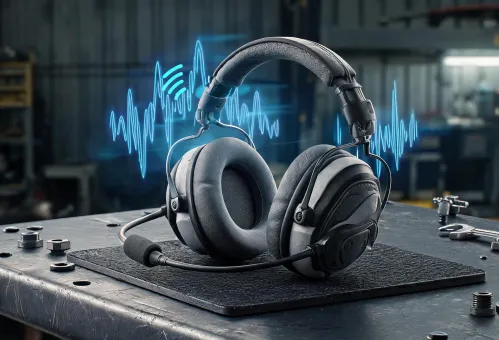
Smart PPE hardware portfolio

Four Hardware Patterns for a Connected Pilot

Wearable hearing protection communication headset

Communication Headsets

Electronic hearing protection with communication planning for loud work areas where instructions and alarms matter.

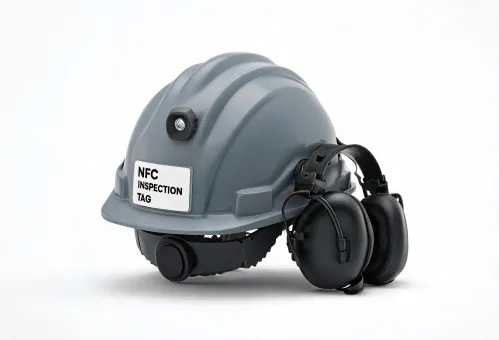
Smart hard hat with headset accessory

Smart Hard Hat Fit

Helmet-mounted headset workflows with assignment records, inspection prompts, and companion PPE compatibility notes.

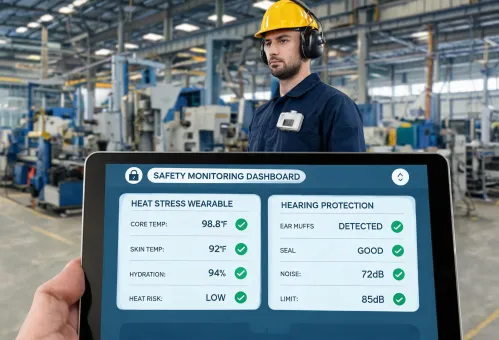
Heat stress wearable paired with headset dashboard

Heat Stress Pairing

Optional worker wellness signal integration for teams that review heat, noise, and shift fatigue together.

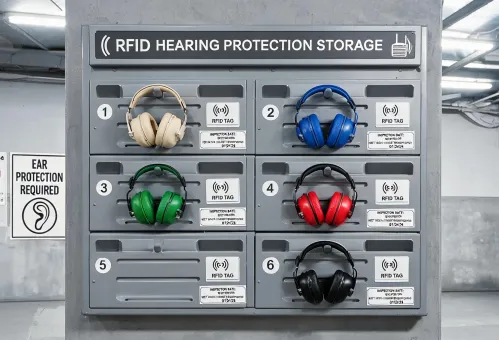
RFID tagged hearing protection storage station

RFID Assignment

Simple headset assignment and hygiene kit reminders for crews that share storage rooms or move between sites.

EHS dashboard live demo

Dashboard Cards Built for Supervisors, Not Just Analysts

The demo panel shows what a pilot can track: training completion, headset condition, noise-zone observations, and open follow-up tasks. It avoids medical interpretation or unsupported safety guarantees. The dashboard is meant to make ordinary program discipline visible so a supervisor can intervene before equipment care, documentation, or communication rules drift.

Noise ZonePress Line A89 dBA review queue
Headset Care18 kits dueNext replacement window
Training96% complete4 workers pending
Feedback7 notesComfort and communication
Data integration architecture

Sensor to Gateway to Cloud to Enterprise Tools

The architecture stays deliberately modular. A pilot can begin with a headset assignment export and later connect to EHS or BI systems if the business case is proven. Data fields should be scoped to worksite program management, and worker privacy expectations must be defined before any live deployment.

Headset and tags
Gateway
Cloud dashboard
SAP · Power BI · Snowflake · ServiceNow
ROI calculator

Estimate the Operational Case for a Pilot

The calculator is a planning aid. It can estimate time recovered from fewer manual headset checks, fewer misplaced assignments, and simpler reporting. It should not be used as a promise of injury reduction or as a substitute for site-specific risk assessment.

Estimated monthly admin time value$3,840
90-day deployment

Pilot Program Built in Four Phases

Weeks 1-2

Scope and Data Boundaries

Define locations, worker groups, privacy expectations, and the headset families to review.

Weeks 3-5

Hardware Setup

Assign equipment, train supervisors, confirm storage locations, and prepare documentation files.

Weeks 6-10

Field Observation

Collect practical feedback on comfort, communication, cleaning, battery use, and replacement needs.

Weeks 11-13

Decision Review

Summarize what worked, what needs adjustment, and whether broader rollout has a documented case.

Book the pilot conversation

See Whether Connected Hearing Protection Fits Your EHS Workflow

Share your location count, worker groups, headset use cases, and reporting tools. The team can respond with a pilot outline and evidence checklist.

Book a Demo